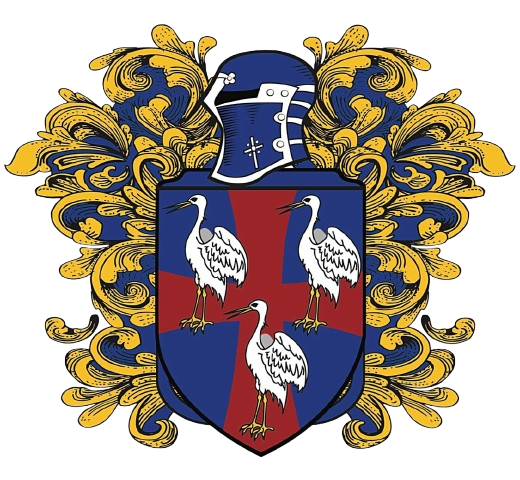
Lord Gibson Coat of Arms
Whitby Abbey ruins, Yorkshire — a medieval landmark of northern England

A Yorkshire life · A Scottish legend

The Templar
connection

An illustrated record of Lord Neil B. Gibson, his family history, and the enduring mystery of the Knights Templar in Britain.

The founding

From the Norman Conquest
to the Holy Land

Lord Neil Gibson, his family history and lineage were with the founding fathers of the Knights Templar.

Gibson, a Scottish and English surname, derived from a patronymic form of the common mediaeval personal name Gib, is a short form of Gilbert. Variant forms of the surname include Gibsoun, Gipson, Gibbson, Gibbons, Gilson, Gibb, and Gibby among others. The Norman name, originally found as Gislebert or Gillebert, is composed of the Germanic elements Gisil, meaning “hostage” or “noble youth”, and berht, meaning “bright” or “famous”. The name Gilbert became very popular in England during the Middle Ages.

It’s been rumored that Lord Neil B Gibson’s ancestors were to be part of the group who were believed to be related to Hugh de Payens. Some further even believe Lord Gibson to be a descendent of Hugh de Payens himself.

There are records of a Templar meeting in Belize, South America, where Lord Neil B Gibson was regressed by a member of the High Commission of Templars, and witnesses demonstrated that he displayed the signs of being a descendant of Hugh de Payens. Many other people have been regressed in the same manner, which displays their connection to other famous Knights Templar leaders.
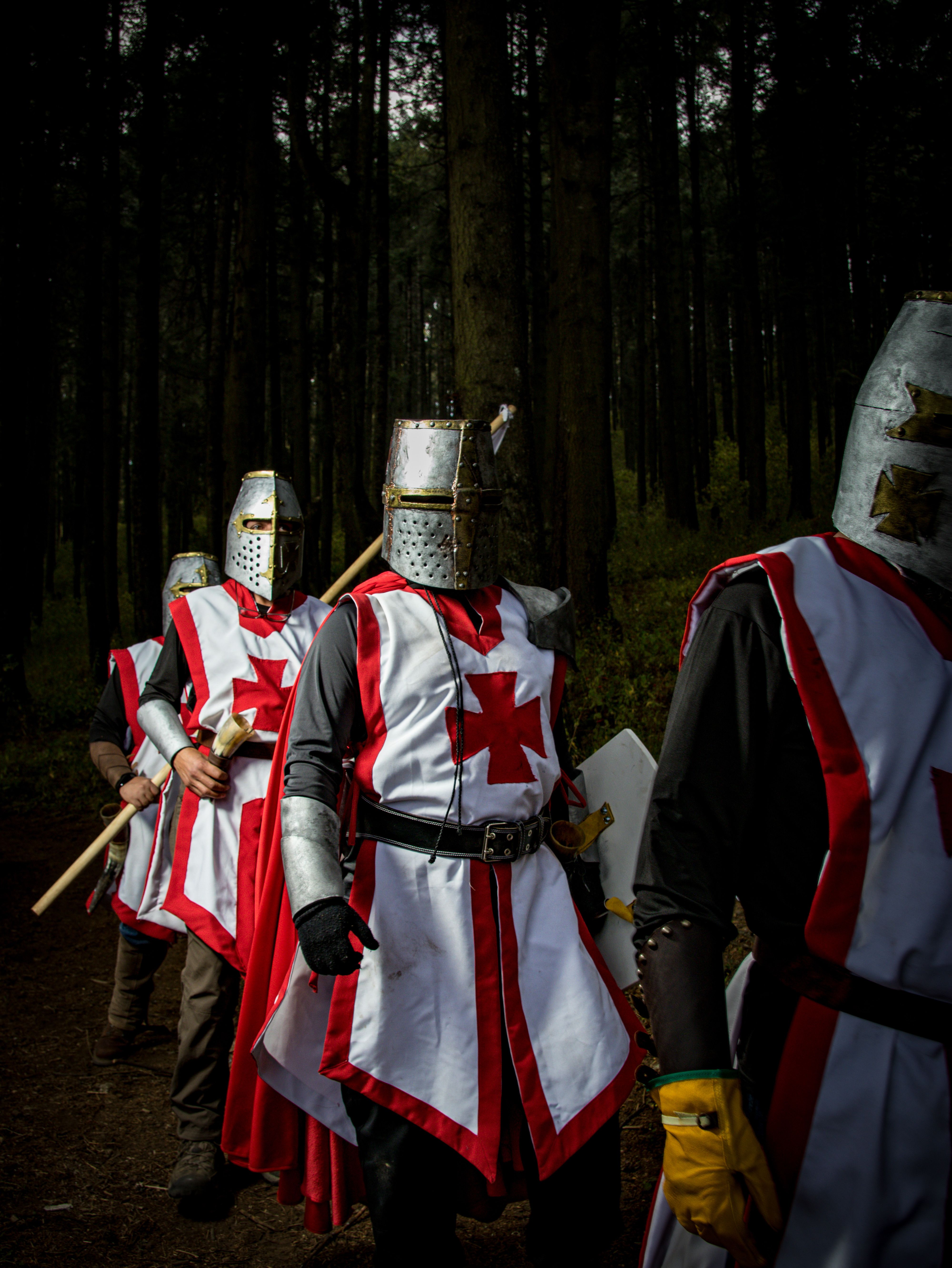
A medieval knight in protective armor holding a sword in a historic stone setting.
A knight of the order, late 14th century

The long road

Eight centuries
of allegiance

From the Norman Conquest to the New World, the Templar story winds through the Wars of Independence and into the foundations of modern Britain.

  1. 1066

    The Norman arrival

    The name Gilbert is introduced into Britain by followers of William the Conqueror, shortly after the Norman Invasion.

  2. 1118

    The order is founded

    Hugh de Payens forms the Knights Templar to protect the road to Jerusalem — a brotherhood of monk and soldier.

  3. 1306

    Bruce excommunicated

    Robert the Bruce is excommunicated by Clement V just six weeks after his coronation as King of Scots.

  4. 1307

    Friday the 13th

    Philip IV of France arrests every French Templar knight he can find — the origin of the superstition.

  5. 1309

    Trial at Holyrood

    Scottish Templars are arrested and tried at Holyrood on 17th November. The court returns a not proven verdict.

  6. 1312

    The order abolished

    The order is formally dissolved. In reality the Templars merge with the Hospitallers and endure in Scotland.

  7. 🗡1314

    Bannockburn

    Templar knights are reputed to fight alongside Bruce against Edward II — a decisive switch of allegiance.

  8. 1398

    Sinclair sails west

    Henry Sinclair, Earl of Orkney, sails to North America well before Christopher Columbus.

1118 — 1398 · The chronicle endures

Published essays

The original
2014 posts

These two articles are now surfaced in the archive as a pair of linked records, matching the material already woven through the site.

The Knights Templar and Connection to Lord Gibson

8 August 2014 · Historical essay · Scotland and England

A broad account of the Gibson surname, Hugh de Payens, the Scottish Templar estates, the Holyrood trial, Bannockburn, the Argyll graves, and the families linked to the order in Britain.

Read the history

Warter Priory and Wheldrake, a Walton Hall connection to Lord Neil Gibson

8 August 2014 · Estate essay · Yorkshire lineage

A companion record on Walton Hall, the Law of Property Act titles, Charles Waterton, the De Burgh and Neville lines, and the Yorkshire estates tied to Wheldrake and Warter Priory.

Read the estate record

Wheldrake & Warter Priory

A Life That Began at Walton Hall

Walton Hall, West Yorkshire
Walton Hall53° 38′ 31″ N

“Having been born in Walton Hall, Lord Neil B. Gibson’s journey in this life began on September 10th, in the year of 1963.”

Estate Record · August 8, 2014

As his life continued to flourish, he acquired lands and thus retained his Lord title as demonstrated today. Pursuant to the Law of Property Act of 1925, the titles Lord of Wheldrake and Warter Priory are under the Assignor Asset, claimed as incorporeal rights to the said style and title. Wheldrake and Warter Priory are situated within a 25-mile radius as the crow flies of each other.

Built in the Palladian style of 1767 on an island within a 26-acre lake situated on a former moated hall reminiscent of the medieval era, Walton Hall remains a stately home in West Yorkshire adjacent to Wakefield. Prior to functioning as part of the Waterton Park Hotel establishment, the hall served as a maternity home during the 1940s, early 1950s, and again in the early 1960s—where Lord Neil B. Gibson was born.

The home boasts ancestry to the naturalist Charles Waterton, who converted Walton Hall into the world’s first wildfowl and nature reserve. Waterton’s son, Edmund, eventually sold the estate, and the Waterton Collection now resides in the Wakefield Museum.

Feudal Lineage Summary

  • Ailric the Thane: Anglo-Saxon King’s Thane listed in the Domesday Book.
  • De Burgh & Neville: License to crenellate granted in 1333 to Sir Philip de Burgh.
  • Waterton Family: Acquired in 1435; served Henry VIII at the Field of the Cloth of Gold.
Born
10 September 1963
Seat
Walton Hall, West Yorkshire
Titles
Lord of Wheldrake · Warter Priory
Lineage
Waterton · De Burgh · Neville

The living legacy

Figures who shaped
the bloodline

From crusading knights to a pioneering naturalist, the families entwined with Lord Gibson’s story left their mark on the land and the order alike.

Hugh de Payens

Founder · 1118

First Grand Master of the Templar order. Lord Gibson is rumoured to descend from his line.

Robert the Bruce

King of Scots · 1306

Tradition claims Bruce was himself a Templar, turning the order’s sword toward Scotland.

Henry Sinclair

Earl of Orkney · 1398

Sailed to North America a century before Columbus, carrying Templar lore westward.

Charles Waterton

Naturalist · Walton Hall

Ancestor of the Gibson line who created the world’s first wildfowl and nature reserve.